
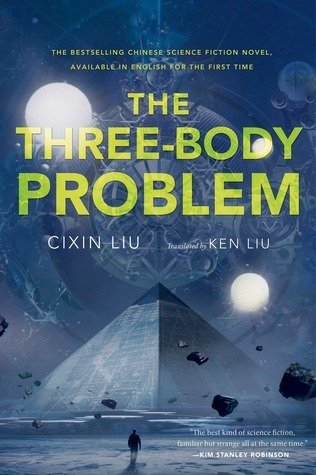
Review of The Three-Body Problem by Liu Cixin
What drew me into The Three-Body Problem, the first book in Liu Cixin’s acclaimed trilogy, was the promise of an epic science fiction adventure intertwined with philosophical musings and the complexities of humanity’s moral fabric. However, as I sat down to explore the vast cosmos Liu lays out, I found myself in a realm where my expectations collided with the realities of a narrative that proved challenging—both intellectually and conceptually.
The narrative unfolds across two timelines, tightly woven into the fabric of China’s Cultural Revolution and its present-day implications. We meet Ye Wenjie, a brilliant astrophysicist whose exhausting journey begins with profound personal loss. Her father is killed for his steadfast belief in science, and she is left navigating a world steeped in fanaticism. Meanwhile, we have Wang Miao, a nanotechnology researcher who finds himself in a chilling investigation as the world’s leading scientists begin to mysteriously commit suicide. Their paths intertwine through a bizarre online game that serves as a portal to an alien civilization facing its own existential crises.
While I appreciated the ambitious scope of the narrative, I struggled with the dense scientific concepts and political intricacies, which sometimes felt like a barrier rather than a bridge to understanding the story. The premise of the “Three Body Problem” itself—rooted in chaos theory and astrophysics—is fascinating, yet I found myself grappling with the math rather than flowing with the plot. Liu’s writing is contemplative, filled with intricate detail, but at times this depth led me to feel more confused than enlightened.




Despite my struggles, moments of brilliance shine through, particularly in how Liu creates a stark juxtaposition between existential dread and the pursuit of knowledge. The game that Wang plays, where civilizations rise and fall under the whims of chaotic suns, resonated with me on a deeper level. There’s a haunting beauty in the futility of survival that mirrors our human experience: striving for meaning in the face of chaos.
As I read, I often recalled a quote from the book that lingers in my mind: “The universe is a dark place.” It encapsulates the desolation and wonder that Liu explores throughout his narrative. However, I often felt at odds with the cultural and scientific references, leading to moments where I consequently wished for a more simplified narrative to engage with more deeply.
Readers who thrive on complex theories and appreciate multilayered storytelling may find The Three-Body Problem an enriching experience. However, for those of us who seek clarity amidst the chaos, parts of the journey may prove overwhelming. The emotional weight of Ye’s story ultimately kept me invested, but I often found myself lost in the labyrinth of scientific discourse.
In conclusion, while The Three-Body Problem is undoubtedly a work of significant merit and ambition, it requires patience and a willingness to wrestle with its layers. Perhaps, just like the civilizations in the game, we too must learn to navigate the unpredictability of the universe we inhabit. This book will undoubtedly find its champions, but for me, it served as a reminder of the delicate balance between awe and bewilderment in the realm of science fiction. If you’re ready to engage deeply with the cosmos and the human condition, give it a try—but don’t forget your walking shoes; the journey may take you down a few unexpected paths.
[ad_2]
Discover more about The Three-Body Problem (Remembrance of Earth’s Past, #1… on GoodReads >>