
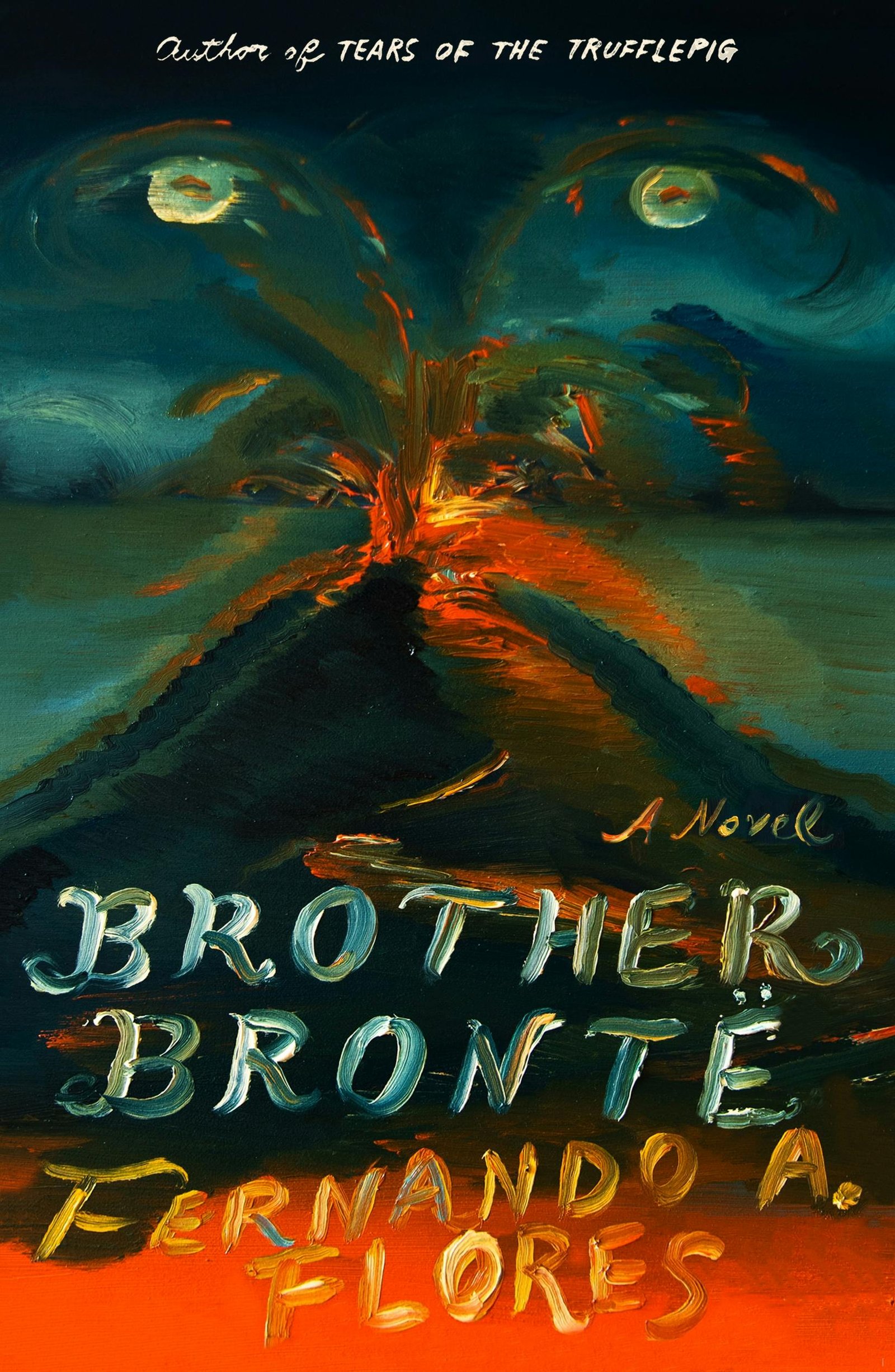
Finding Light in Darkness: A Review of Brother Brontë by Fernando A. Flores
When I first stumbled upon Brother Brontë, I was drawn in not just by its striking title but also by its premise—a dystopian tale set in a future landscape resembling a nightmarish reflection of our current reality. Fernando A. Flores has always had a knack for blending the surreal with gritty realism, and this latest venture into the oppressive world of Three Rivers, Texas, felt like an invitation to journey through a broken yet profoundly human experience.
In Brother Brontë, we meet Neftalí Barrientos, one of the dwindling literate souls in a society where literature is deemed contraband. Navigating an authoritarian regime led by the tyrannical Mayor Pablo Henry Crick, Neftalí and her friend Proserpina Khalifa—former bandmates in the punk group Missus Batches—find themselves becoming unlikely guardians of forbidden stories. Each page is imbued with a sense of urgency, as they fight not just for survival but for the preservation of culture and identity in a world drowning under volcanic ash and oppressive political forces.
Flores’s construction of a tripartite narrative is where the novel truly shines. He deftly weaves the struggles of Neftalí and Proserpina with the lurking specter of Jazzmin Monelle Rivas—a fictional author whose work becomes a beacon of hope and resistance. The clever layering of these stories not only deepens our understanding of the characters’ motivations but also reflects on how narratives can serve as lifelines during bleak times. Rivas’s book-within-a-book, featuring twin sisters confronting the erasure of women’s voices in literature, resonates deeply, challenging readers to think about our own cultural narratives.



I was particularly struck by Flores’s prose style, which dances between visceral imagery and a lyrical quality that is breathtaking. One moment, we plunge into the raw grit of life in Three Rivers: “Rain fell hard like slabs of ham as a squad car pulled into the nearly abandoned neighborhood…” The next, we’re craving the textured intimacy of physical books, as characters reflect on their tactile nature despite the looming threat of censorship.
However, it’s not all perfectly executed; there are moments when the pacing drags, with character histories that, while fascinating, divert from the narrative momentum. At times, the narrative’s complexity can be daunting, but it rewards patience—certainly a testament to the intricacies of dismantling oppressive systems that don’t yield to easy resolutions.
What remains powerful—and perhaps the novel’s most profound message—is the resilience of women’s voices amid efforts to silence them, a theme that feels inexorably relevant today. Flores beautifully articulates this through characters like Neftalí, who channels her late mother’s spirit, and Proserpina, whose artistic defiance is contagious.
Ultimately, Brother Brontë is a spellbinding exploration of art as a form of resistance. It’s a love letter to the literary world, urging us to treasure the stories that shape our identities. This book will resonate deeply with those who appreciate layered narratives and are drawn to evocative prose that doesn’t shy away from the complexities of existence.
If you’re ready to dive into a reading experience that is at once unsettling yet affirming, then Brother Brontë might just become a cherished companion in your literary journey. The echo of its themes and characters will linger long after the final page—a haunting reminder of the enduring power of stories to light the way in dark times.
[ad_2]