
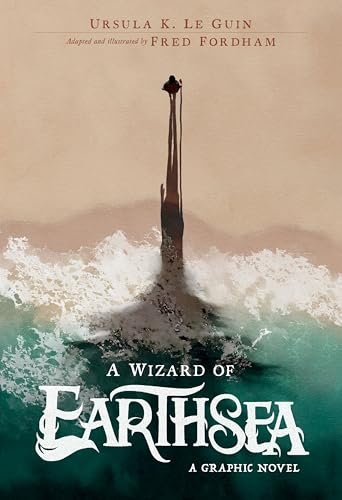
A Journey Back to Earthsea: The Graphic Novel Adaptation
As a lifelong fan of Ursula K. Le Guin’s Earthsea series, I find myself completely mesmerized every time I return to its pages. The first novel, A Wizard of Earthsea, is a cornerstone of fantasy literature, laying down timeless tropes like wizarding schools and the significance of names long before they became staples in the genre. So, when I learned about the new graphic novel adaptation, I felt a rush of excitement mixed with cautious hope. Would this new iteration finally do justice to the rich lore and profound themes woven into Le Guin’s spellbinding narrative?
In this adaptation, we follow Ged—also known as Sparrowhawk—as he navigates his journey from a reckless young wizard to one who learns humility. The story begins at the prestigious wizarding school on the island of Roke, where Ged’s curiosity leads him down a dark path. He casts a forbidden spell and inadvertently conjures a shadowy creature that he must confront. Yet what sets A Wizard of Earthsea apart from typical fantasy tales is its introspective nature. Le Guin masterfully explores themes of identity, power, and responsibility, often in the quiet reflection of Ged’s inner turmoil rather than through grand clashes of sword and sorcery.
The artwork by Fred Fordham is, without a doubt, a triumph. His style beautifully encapsulates the ethereal quality of Earthsea. The muted color palette and organic lines create a dreamlike atmosphere that works perfectly with the story’s depth. I found myself lost in the illustrations, where entire pages occasionally lack text, allowing the visuals to narrate Ged’s emotional landscape. Fordham doesn’t shy away from portraying Ged and the other characters as brown-skinned, adhering closely to Le Guin’s original vision of representation—a critical choice that lends authenticity and expands empathy in the narrative.





While the artwork shines, I did find myself grappling with the adaptation’s limited text. The overall minimalist approach, while visually striking, risks alienating those who haven’t read the original novel. Le Guin’s prose provided layers of insight into Ged’s thoughts and motivations that might be more challenging to grasp without prior familiarity. Close-ups of Ged’s expressions convey his inner struggles, but I can’t help but wonder if new readers will find it challenging to fully appreciate his journey without Le Guin’s rich commentary.
For those familiar with A Wizard of Earthsea, this graphic novel adaptation serves as a quick yet immersive revisit to a profound narrative. The engaging illustrations and respect for cultural representation make it a commendable addition to the Earthsea legacy. I wholeheartedly recommend experiencing the original novel first to understand the nuance behind the visuals and themes fully.
In closing, A Wizard of Earthsea: A Graphic Novel feels like a warm embrace revisiting a beloved world while introducing it in a fresh format. Both longtime fans and those new to Ged’s story will find something to cherish within its pages. Whether you’re a longtime admirer of Le Guin’s work or someone curious about the origins of modern fantasy narratives, this adaptation is well worth your time. Dive in, and let the winds of Earthsea carry you away!
[ad_2]
Discover more about A Wizard of Earthsea: A Graphic Novel (The Books of Ear… on GoodReads >>